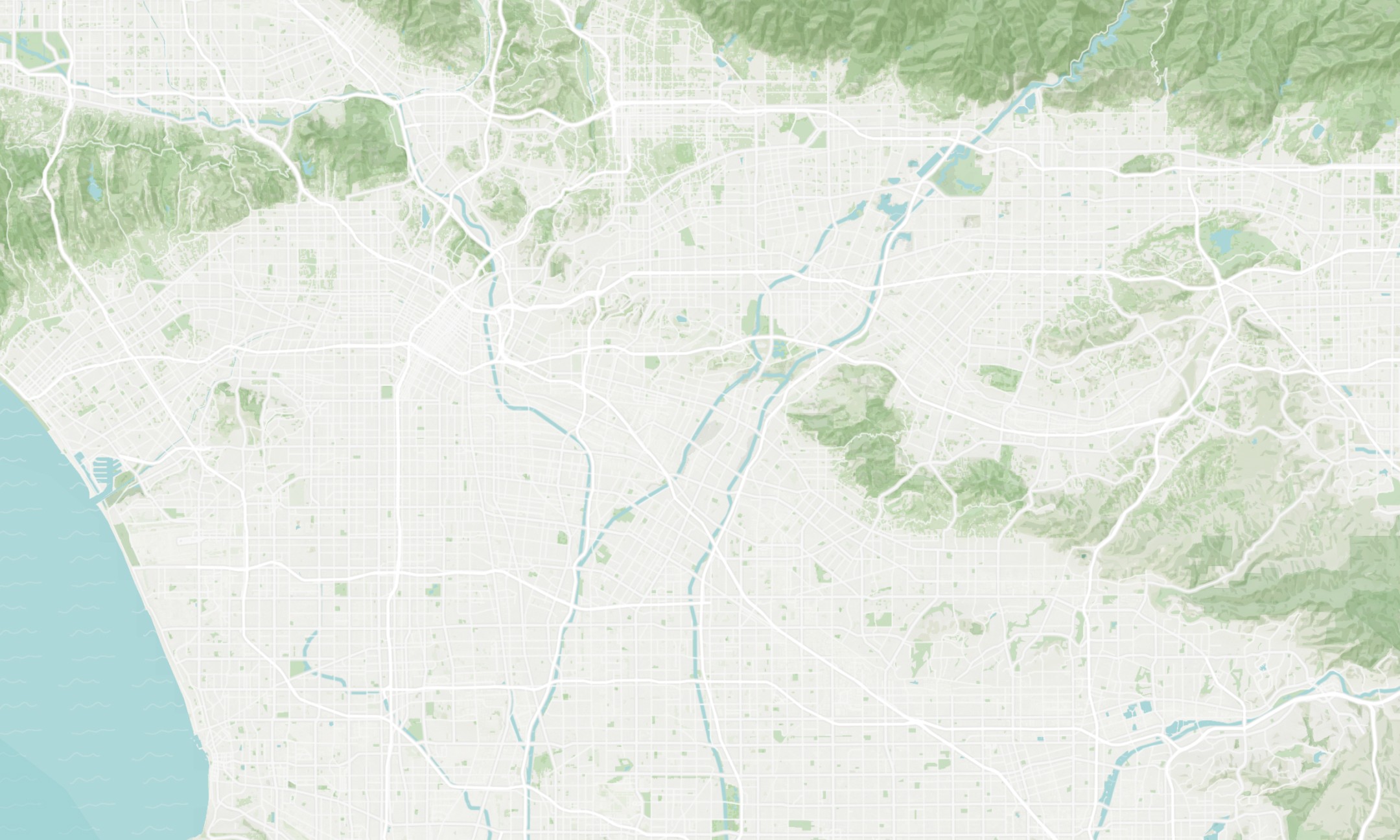
Los Angeles is a city rich with water, if only the concrete would let it flow freely. Photograph by Alex Krowiak
Neighbors Magazine
• 7 min read
• 07.08.2026
What Is Living Infrastructure?
Living infrastructure is all around you. We define it as an approach to designing and caring for our neighborhoods so that all life can thrive.
Explainer by Alisa Petrosova and Devon Provo
Alisa Petrosova is an interdisciplinary artist and strategic narratives director at Spherical.
Devon Provo is an urban planner, herbalist, and the senior manager of planning and program alignment at Accelerate Resilience L.A.
If you took a square foot of healthy soil from beneath Los Angeles right now, you would likely find more microbial organisms at work in it than you’d find humans on Earth.
Those microbes break down organic matter, cycle nutrients, and maintain constant conversation with plant roots, passing chemical signals through a network so intricate and responsive that scientists have compared it to a nervous system. Beneath the forest floor, fungal threads connect tree roots, allowing them to share sugars. Offshore, kelp forests absorb carbon, soften waves, and create more stable coastal microclimates that shape life along the shoreline. At a planetary scale, forests inhale carbon and exhale oxygen and water vapor in rhythms that influence rainfall patterns thousands of miles away.
We call this the life web: a system of reciprocal relationships operating at every scale, from the microbiome underfoot to the atmosphere overhead. Everything in it connects. Everything depends on everything else.
This is living infrastructure. It has been functioning for billions of years. It cycles water, builds soil, regulates temperature, sustains habitat, and maintains the conditions on which all cities, all communities, and all human activity rest.
When we say "living infrastructure," we mean two things: the life web that already sustains our cities and the practice of working with that web rather than against it. We mean designing human activity so that we participate in the life web, rather than attempting to override it.
How colonization erased living infrastructure
People have always shaped their landscapes. For millennia, communities around the world designed water systems, managed fire, and tended the earth in ways that worked with the life web.
A worldview built on control and separation spread through colonization and came to dominate governmental, economic, and city-planning decisions. It treated the life web as raw material: rivers to redirect, wetlands to drain, soil to cover and build on. In exchange, cities got roads, water supplies, flood control, and electricity. For a while, this allowed humans to thrive. Some humans far more than others.
“We define infrastructure as more than merely physical; infrastructure includes the governance, social structures, and stewardship that shape human activity and interaction with their places over time.”
In Los Angeles, sprawling development paved over hundreds of acres of native habitat. Hundreds of miles north, city planners built the L.A. Aqueduct, which drained out Patsiata (Owens Lake) within a decade of its completion, leaving behind dust that violated safe air standards by a factor of 100. Back in Los Angeles, redlining concentrated harmful infrastructure in Black, Brown, and low-income communities, where it remains.
Today, much of our infrastructure replaces soil and vegetation with pavement and concrete. During storms, that hard surface sends water rushing into drains and channels, increasing flood risk and cutting off aquifers from recharge. On hot days, the same surfaces trap heat and make neighborhoods hotter. This extractive pattern fails to protect people because it degrades the very living systems that make our survival possible—systems that have been refined and cultivated over billions of years.
Modern infrastructure like this has always served some humans at the expense of others—and of every other living system.
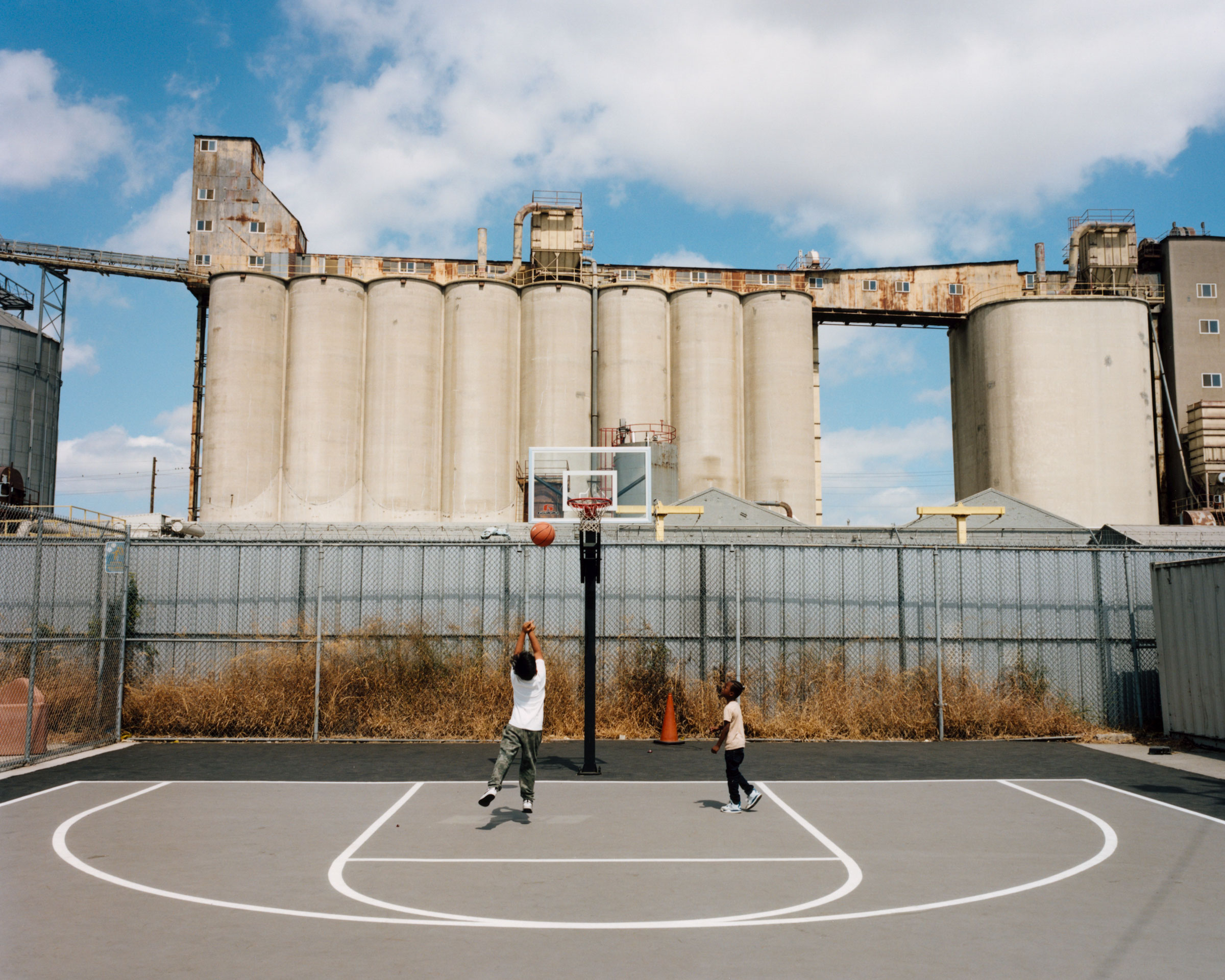
In South Central L.A., the fossil fuel industry is hard to escape. Living infrastructure confronts the challenges of living alongside industry, planting seeds for communities to imagine a different way forward. Photograph by Carlos Jaramillo
Living infrastructure offers a longer‑term planning approach. It reimagines infrastructure to work with the health of the life web, honoring the role every living part of that web plays in keeping the whole system resilient.
From green infrastructure to living infrastructure
As the costs of extractive infrastructure became harder to ignore, practitioners began looking for alternatives.
Green infrastructure (such as wetlands restoration, rain gardens, street trees, bioswales, and floodable parks) emerged as a correction. It acknowledged that natural systems do things concrete systems can’t: absorb water, cool air, filter pollutants, sustain habitat. In 2016, California formally recognized source watersheds as components of its water infrastructure, acknowledging that forests and meadows do essential work. Marshes reduced damage from Superstorm Sandy by an estimated $625 million. Green corridors in Medellín brought local temperatures down by 2°C within three years.
Green infrastructure has largely remained expert-driven. Research shows only 13 percent of U.S. green infrastructure plans define fair access or address who benefits. Nearly all—more than 90 percent—lack any inclusive planning processes. New parks displace long-time residents while benefits cluster in wealthier neighborhoods.
We define infrastructure as more than merely physical. Infrastructure includes the governance, social structures, and stewardship that shape human activity and interaction with their places over time.
“Humans don’t stand separate from Earth’s living systems. Neighborhoods, cultural practices, mutual aid networks, and community organizations function as living systems, carrying their own histories, knowledge, and ways of relating and operating.”
Living infrastructure invites us beyond technical solutions into the relationships that make places function. In green infrastructure, a part of the life web may receive more attention, but it is treated as a physical intervention rather than as a socioecological system. The people embedded in that system rarely get to shape the design, participate in its care, or be recognized as essential to its success. As a result, green infrastructure often overlooks the very relationships needed to sustain it.
To answer the question “What is living infrastructure?” we could say: “Well, what is living?” It resists definition. It implies entanglement, complexity, and the unfathomable beauty of a story that never stops unfolding because resilience is not something we can simply install once and secure; it’s something we practice over time. It’s an ongoing dance of adaptation between people, place, and the systems that hold them. Living infrastructure means bringing all of these principles—bringing our living itself—to the way we work with each other and our neighborhoods.
A world rooted in connection, acceptance, and codependence
People themselves also belong to the life web.
Humans don’t stand separate from Earth’s living systems. Neighborhoods, cultural practices, mutual aid networks, and community organizations function as living systems, carrying their own histories, knowledge, and ways of relating and operating.

To understand living infrastructure, first look to the trees. What do they say? Photograph by Alana Celii / Connected Archives
A chaparral plant has adapted to burn; its seeds need fire to germinate. A river wants to flood its banks; that process deposits sediment and recharges groundwater. A community that has tended a place for generations carries knowledge about how it functions that no technical survey can replicate. Infrastructure that ignores any of these systems will fail the same way concrete flood channels fail: by overriding the shape of the life web and attempting to dominate it.
Imagine this, instead: a bioswale designed with the people who will maintain it and supported over time by a neighborhood stewardship team. A depaved schoolyard planned around how children actually use outdoor space. A publicly funded campus where a senior center and daycare share integrated gardens, allowing elders to tend plants while children play and learn alongside them. Living infrastructure is not just what is built, but how it is governed, who it is for, and who is resourced to sustain it over time. Living infrastructure demands continuous tending in relationship with a place and everyone who calls it home.
The ideas from which living infrastructure springs come from Indigenous land stewardship, environmental justice organizing, ecological science, and community planning traditions across cultures and histories. (See credits page here for a more detailed genealogy.)
Living infrastructure rests on these pillars
Five principles describe this work:
Honor Place: Infrastructure responds to the distinct needs and qualities of local places, cultures, and ecosystems. In practice: designing parks and green spaces that reflect an area's natural and cultural heritage or designing water management systems that mimic local hydrological cycles.
Grow Participation: Communities guide the evolution of their places at all scales. Everyone has a role. In practice: establishing participatory processes so communities guide how their neighborhoods are designed and cared for over time, building strong relationships among governments and residents, or creating social structures like community councils.
Embody Justice: Tend to communities and ecosystems damaged by past infrastructure. Pursue universal access and inclusion. In practice: prioritizing investments in underserved areas, ensuring fair access to green spaces, or designing public infrastructure that serves diverse needs and abilities.
Foster Resilience: Design for adaptability, reliability, and recovery within changing conditions. Emphasize care and maintenance. In practice: designing with native species that handle local weather extremes or implementing flood-resistant landscaping.
Regenerate Life: Strengthen the webs of reciprocal relations that knit beings and places together. Plant the seeds for social and ecological vitality. In practice: integrating biodiversity conservation into urban green spaces, fostering a sense of interconnectedness between people and the natural world that they are a part of, or creating green corridors that connect habitats and support wildlife movement.
How will you tend the living infrastructure around you?
Beneath the pavement, you'll find the microbes hard at work. The willows still find their way to water. These systems have outlasted every city built on top of them. The infrastructure is all around us. The infrastructure is us. Are we willing to tend it?

Even the weeds are worthy of our love. Living infrastructure is about finding a balance with all life, non-native dandelions included. Photograph by Gus Frank
The Living Infrastructure Field Kit is a free platform for the Greater L.A. region: map-based planning tools, local data, and learning materials for anyone designing or proposing living infrastructure projects in their neighborhood.
We invite partners to share this article. To syndicate, please email info@livinginfrastructure.org.

Fact-checking by Sana Venjara
Copy editing by Eleanor Robins
Alisa Petrosova is an interdisciplinary artist, writer, and narrative strategist working at the climate-culture intersection. She's the strategic narratives director at Spherical, where she works on place-based storytelling, campaigns, and experiences. She holds a master’s in climate and society from Columbia University's Climate School, where she taught from 2023 to 2025, and a bachelor’s in fine art from Cooper Union.
Devon Provo is an urban planner and writer. Her work focuses on restoring relationships between people and the places they are a part of. As senior manager of planning and program alignment at ARLA, she leads cross-functional efforts to ensure ARLA’s programs, policy initiatives, and strategic communications are aligned within a living infrastructure approach. Devon received a master’s in planning from the University of Southern California and a bachelor’s in urban and environmental policy from Occidental College.
Gus Frank is a photographer based in Los Angeles whose work is inspired by the surrealism inherent in the American landscape.
Carlos Jaramillo is a Mexican-Colombian American photographer based in Los Angeles whose practice explores identity, heritage, and the intersection of tradition with contemporary life.
Alana Celii lives and works in Los Angeles. Her work has been published in numerous publications, including The New York Times, Atmos, Vogue, TIME, and Harper's.
Alex Krowiak is a Los Angeles-based photographer and creative director looking to bridge the gap between people and nature.

Ready to start co-designing?
The Living Infrastructure Field Kit fosters a collaborative approach to project design.
It is freely available in L.A. County.